Sunday, October 23, 2005

McGill University Grants BA to Student 99

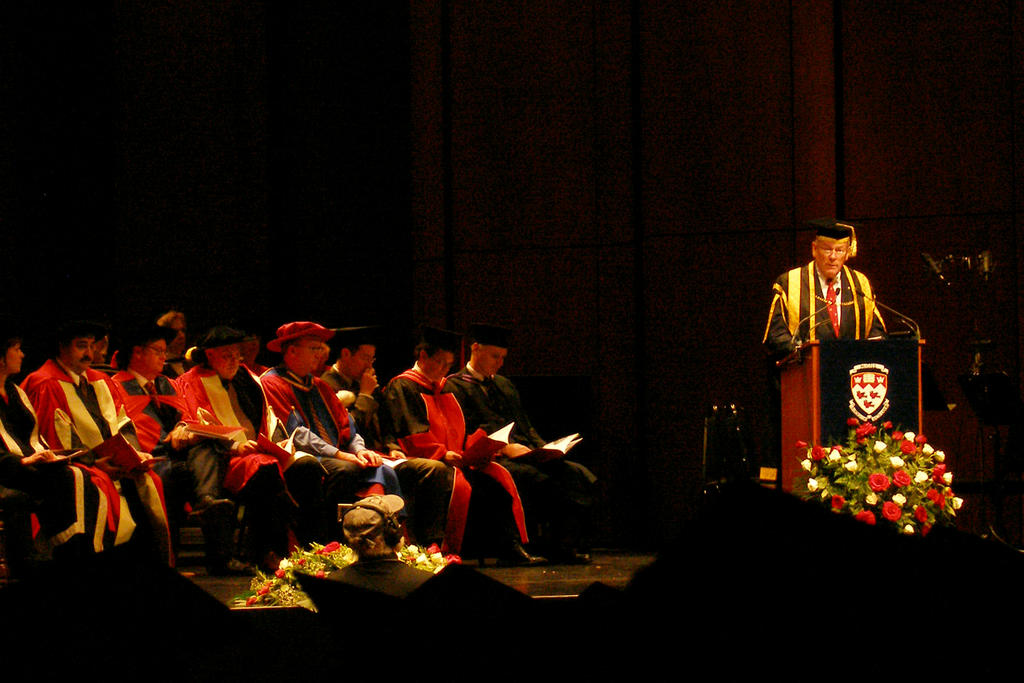
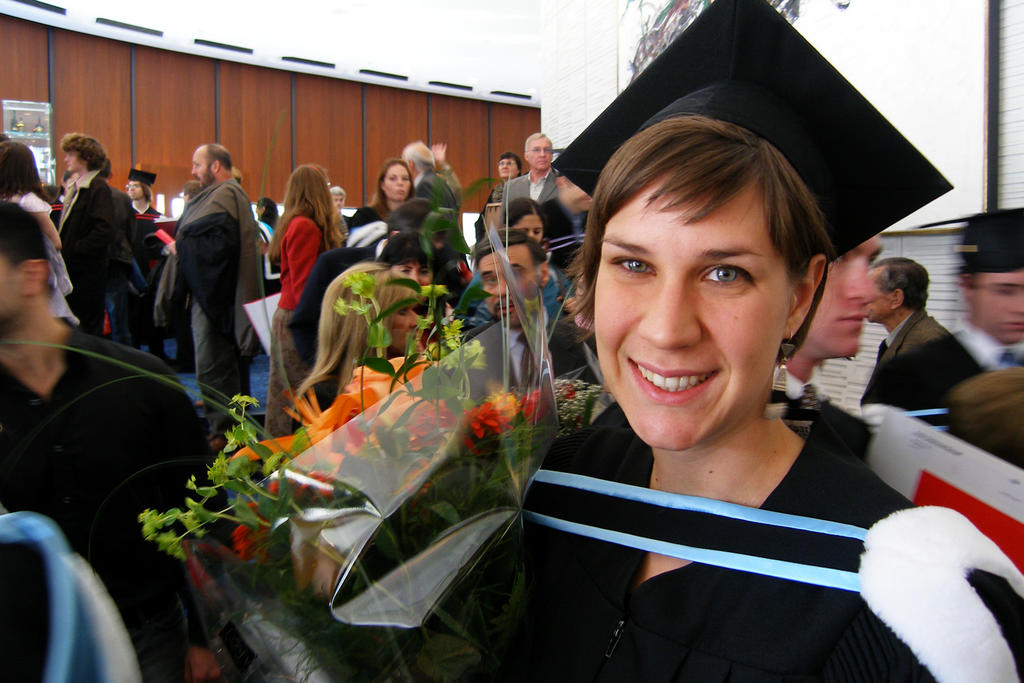
Now for some good news. After four years of diligent study, Student 99 received her BA from McGill University in Montreal on Oct. 20, 2005.


Louise and I were in were in the audience that heard Chancellor Dick Pound encourage the graduates to treat learning as a life-long mission, and to serve well their world, their country and their community.

Student 99 in line to mount the stage.


She picks up her degree after being tapped on the head by the Chancellor.


Happy day !


Hard to say who is prouder.


The Graduate.

Exit Polls of the Presidential Runoff Vote


I guess the right wing socialist wins after all. When I talked to Aunt Wanda in Warsaw this morning, and she told me that she and all the other pensioners in her building voted for Lech Kaczyński, I agreed I would probably have done the same in her position. There's a slight chance that he and his twin brother Jarosław will try to buy popular support by some funding of social programs and pensions. But in the long run I am not optimistic. Lech was not effective as the mayor of Warsaw, so there's little hope he'll be much good as President. I'll bet you anything that in the next few weeks we'll hear that the PiS have decided to take his brother as prime minister after all.

Monday, October 10, 2005

Polish Presidential Election Results

Donald Tusk 35.82%
Lech Kaczyński 33.29%


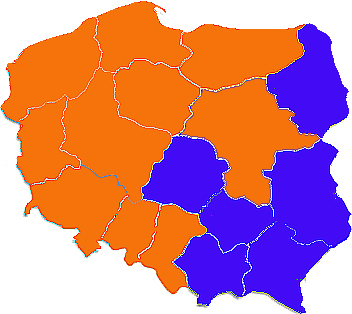
The old Poland voted for Lech Kaczyński,while new Poland voted for Donald Tusk. The peasants voted for Lech, while the towns voted for Donald. Tusk led among both men and women, and in all age groups except the youngest (under 24) and the oldest (over 60).

As neither candidate got an outright majority there will be a run-off vote in two weeks.

The next two weeks will be an extreme test of the nerves of Polish voters. Which of the two center right candidates will become president depends entirely on who the left wing populist vote decides to support. I fear that is going to make it very difficult for Tusk, as Samobrona and LPR tend to get the vote of the peasants, the un or under employed, the less educated, and the retirees - exactly the segments of the population that are more likely to vote for Lech Kaczyński.

Here's how Reuters compares the candidates -

"Tusk, 48, and his Civic Platform want to revitalise the economy by cutting red tape and taxes, saying this is the best way to put back to work Poland's 18 percent unemployed, an EU record high.

The soft-spoken historian paints his party as a force for modernisation that can unite Poles, mend strained relations with big neighbours Germany and Russia and anchor the nation of 38 million in the European mainstream.

Kaczynski, 56, and his Law and Justice party promise a clear break from post-communist Poland under the banner of the "Fourth Republic", "moral renewal" and a return to Christian values while protecting workers' rights and the welfare state.

The conservatives have also courted the religious right, shrugging off EU criticism over their calls to limit gay rights and reinstate the death penalty."


I'm actually pretty proud of how Poland has embraced democracy and the maturity its political processes have begun to show. We've come a long way since 1990, when the leader of the chronically pathetic Libertarian Party of Canada, Stanisław Tymiński, ran for Polish president and came in second only to Lech Walęsa, leading to a second round where he finally lost with 25.1% of the vote. That he got so much will long be a stain on Poland's credibility.

Now, unfortunately, the knives will come out. The twin gnomes, Jarosław and Lech Kaczyński, will never again have an opportunity like this one to impose their vision on Poland. I expect that they will resort to the worst kind of USA style mud-slinging and dirty tricks to get their vote.

Here is how the other candidates did:

Andrzej Leppera 15.11%
Marek Borowski 10.33%
Jarosław Kalinowski 1.81%
Janusz Korwin-Mikke 1.43%
Henryka Bochniarz 1.26%
Liwiusz Ilasz 0.21%
Stanisław Tymiński 0.16%
Leszek Bubel 0.13%
Jan Pyszko 0.07%
Adam Słomka 0.06%

Tuesday, September 27, 2005

Polish Parliamentary Election Results

Prawo i Sprawiedliwość 155
Platforma Obywatelska 133

Samoobrona 56
SLD 55
LPR 34
PSL 25
Mniejszość Niemiecka 2

Sunday, September 25, 2005

Wrocław


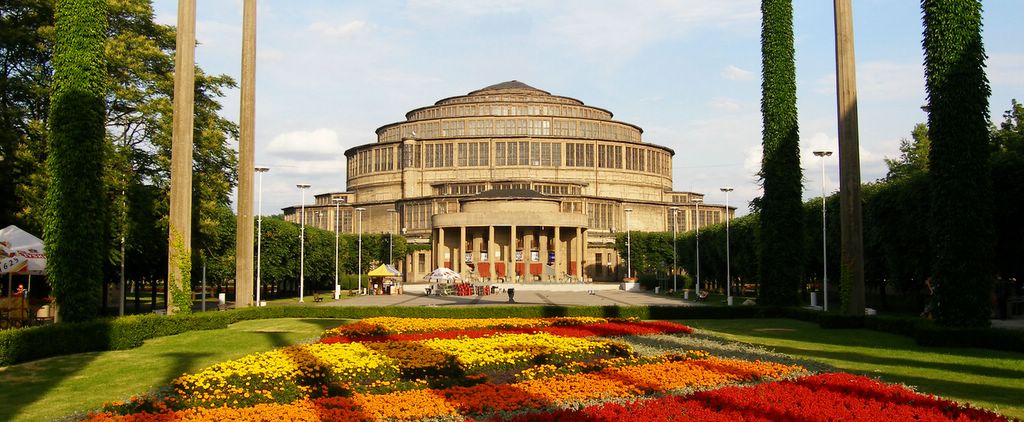
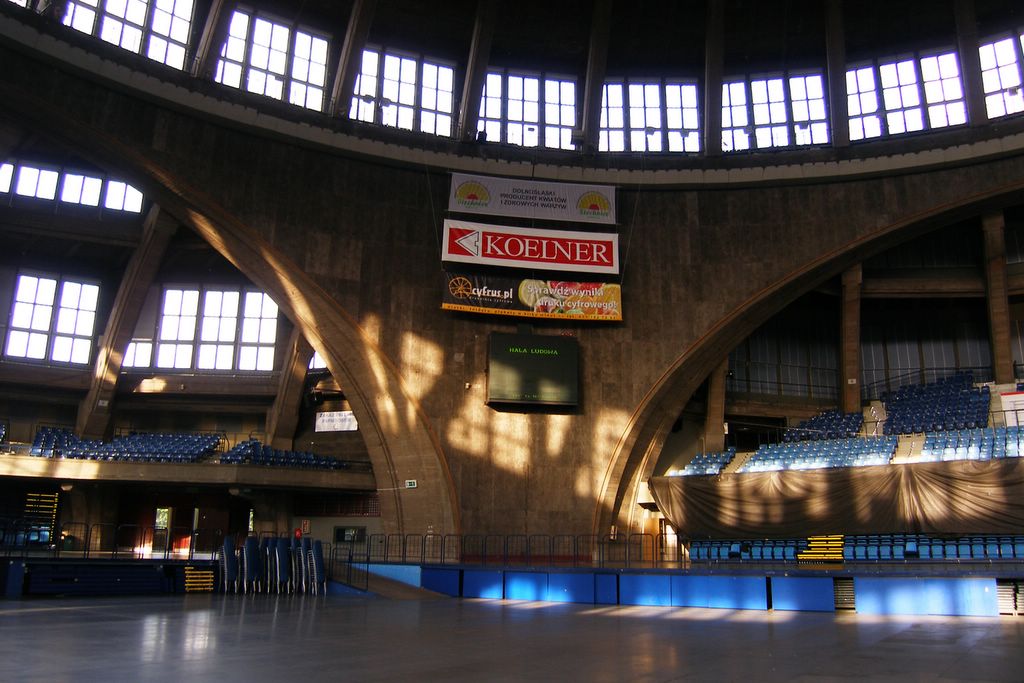
The Hala Ludowa, or Jahrhunderthalle (1913), is an impressive, if little-known, example of early modern architecture. The reinforced concrete dome's 65 metre radius is greater than St. Peter's in Rome. It was built to mark the centennial of von Blücher's victory over Napoleon at the Battle of Waterloo. In this slightly doctored photo I have removed the silly 100 metre-high steel spire, put up for the World Congress of Intellectuals for Peace in 1948, which blocks the view of the hall that Max Berg, the architect, no doubt intended. Wrocław, June 30, 2005.


The vast hall, which can seat 10,000, has been used by speakers ranging from Adolph Hitler to Pope John-Paul II. Note the design of the windows. Berg did not want them to look like holes in the wall, so he used multipe levels of stepped clerestory windows, which result in good interior lighting and a novel form for the dome.


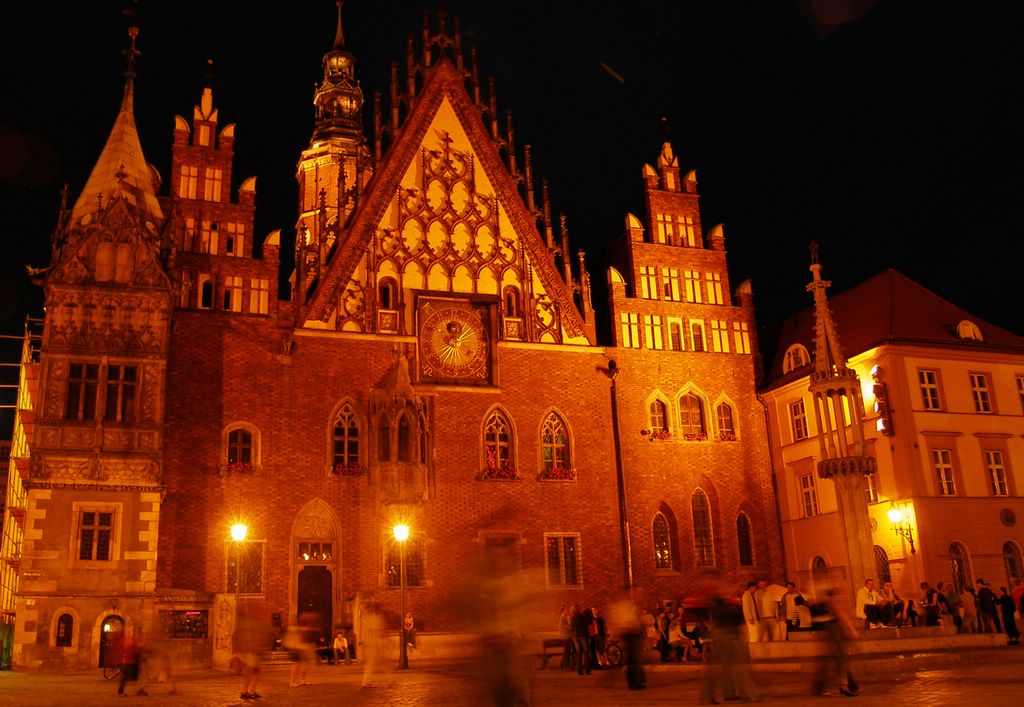
Wrocław has many other interesting buildings. This is the Town Hall, built between 1327 and 1504, and miraculously spared destruction in WWII. There's been an excellent beer hall in the basement for over 5 centuries.


What a difference a decade makes! Or is it joining the EU? I've never seen Poland's cities so alive. Not that long ago, when the sun went down, the streets emptied of people. Truthfully, it was a little dull, although with an edge thanks to the ever-present menace of a totalitarian regime and a sizable occupation force of Soviet troops. It was the kind of atmosphere where going out at night for a coffee and piece of cake could have undertones of conspiracy and danger. Now the worst that can happen is too many new Starbuck's opening up in spaces once devoted to small art galleries and book stores.


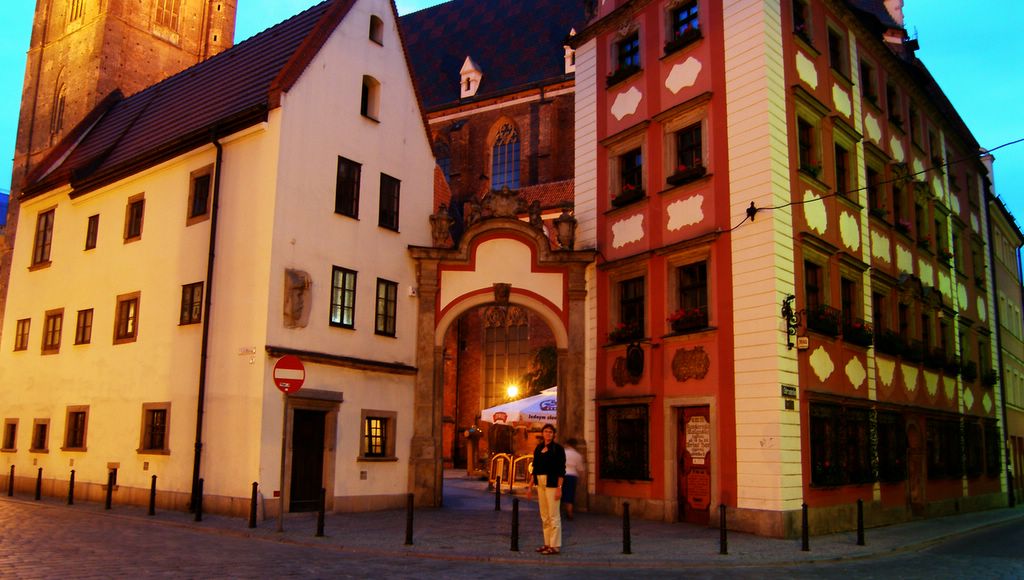
These two houses, which provide the gateway to St. Elizabeth's Church, are known as Jaś and Małgosia, or Hansel and Gretel.


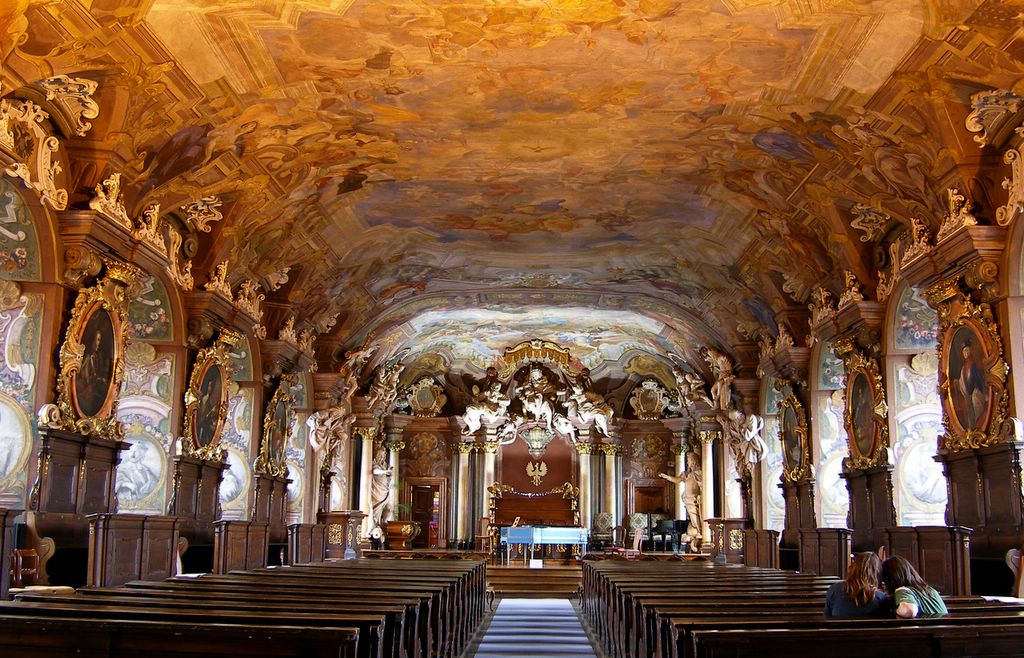
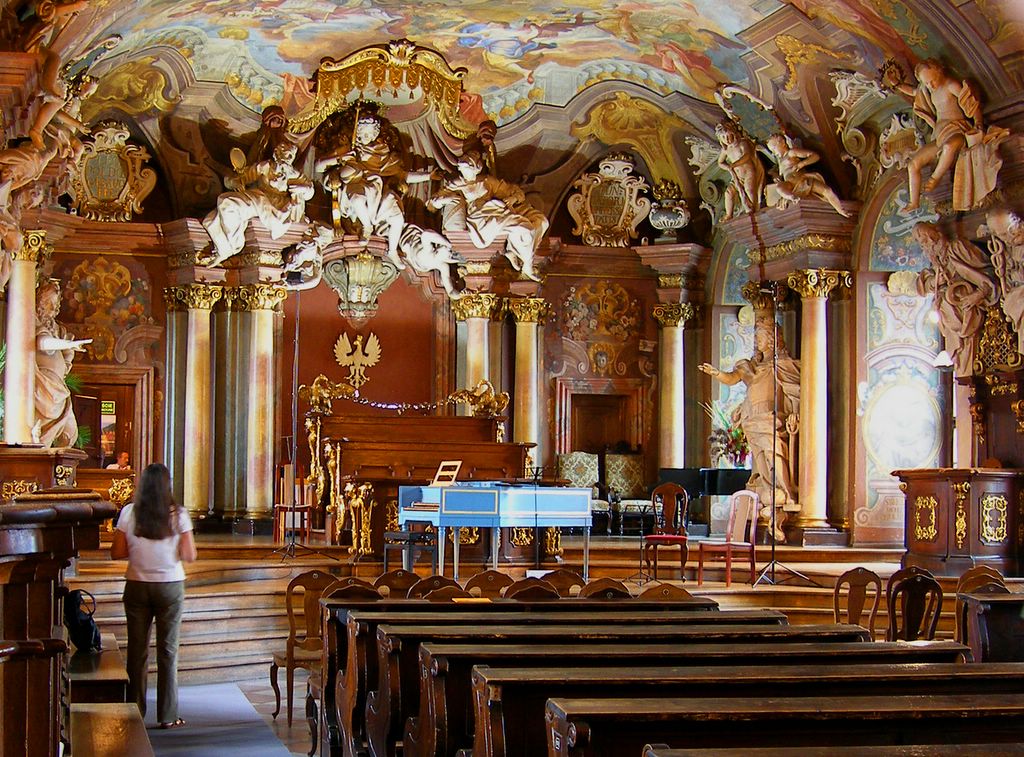
The Aula Leopoldina, the assembly hall of the Jesuit Academy, now the Universty of Wrocław, is another orgy of Baroque. It was built in 1728-48, and is named after Holy Roman Emperor Leopold I, who founded the Academy in 1702 and died shortly after.


Can't you just see how the Jesuits used the Baroque style as their heavy artillery in the Counter-Reformation? Talk about an assault on the senses, trumpeting the glory of the universal church, announcing "we're back" though we may have strayed, and seducing the faithful with breath-taking iconography lest they be tempted to doubt the role of the church in religious life.

Wednesday, September 21, 2005

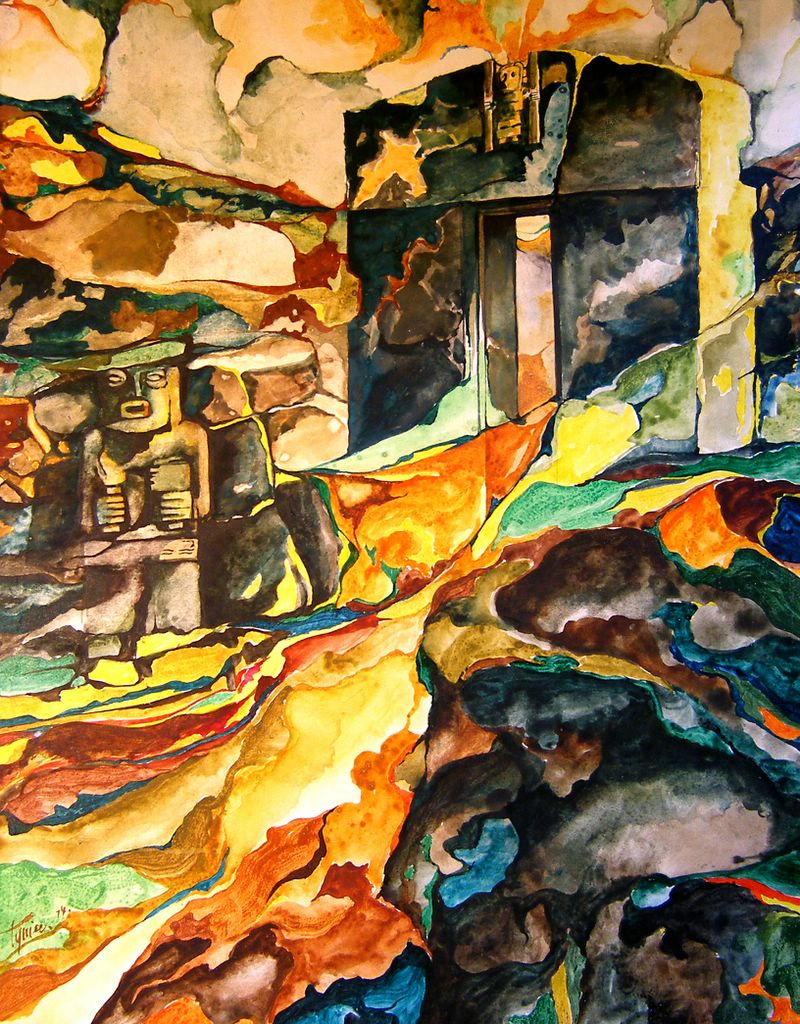
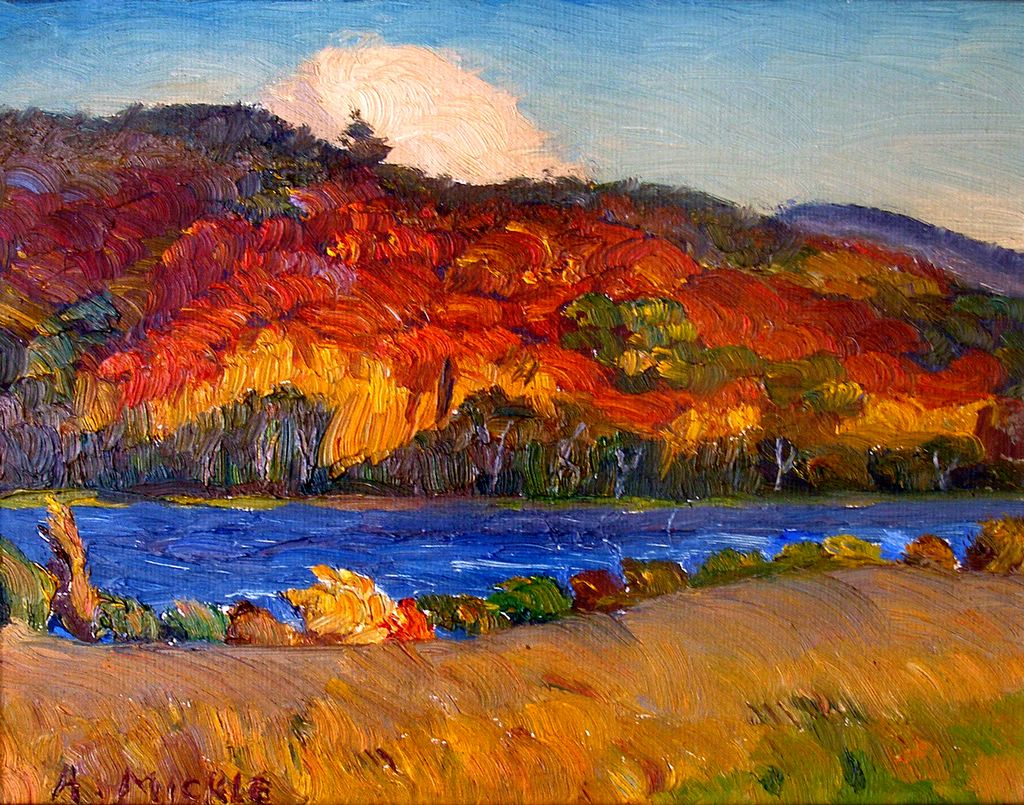
Jan Tyniec and Alfred Mickle


Puerta del Sol. Watercolour by Jan Tyniec, 1974.


At Rupert, Que. Oil on Panel, by Alfred Mickle [n.d.]

Monday, September 19, 2005

Częstochowa, July 13-15, 2005


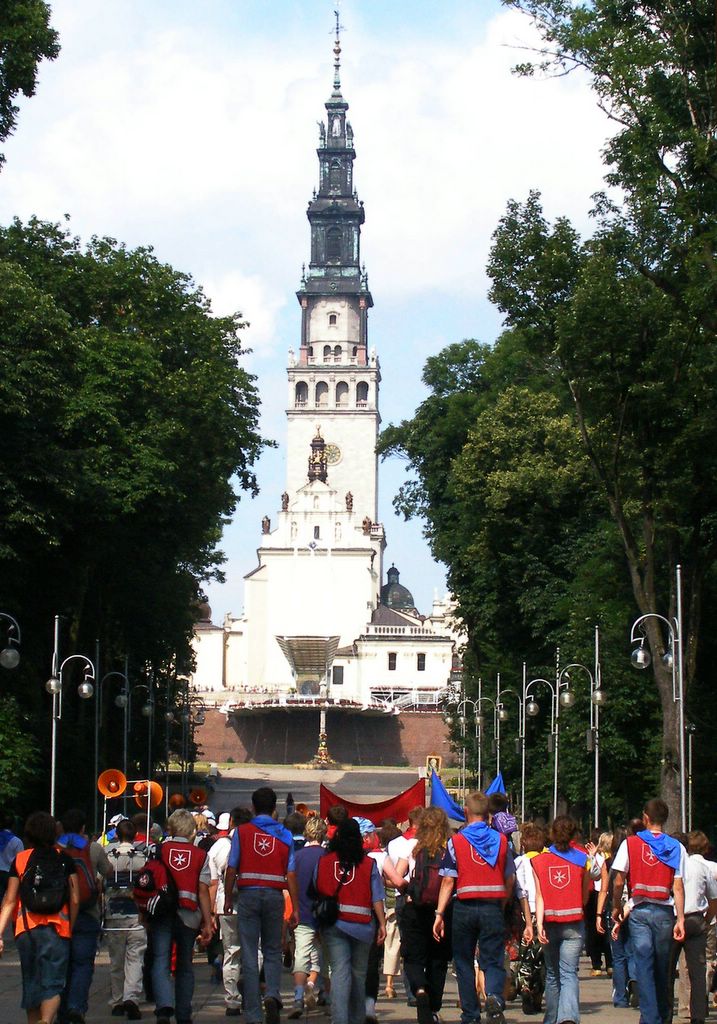
Where do you think all these earnest young people are going? Are they Young Pioneers? No. Are they trade unionists? No. Are they Crusaders? Probably not. Maybe they're pilgrims? Yes indeed, I think they are.


And they are heading straight for the Jasna Góra monastery in my father's home town of Częstochowa, July 14, 2005.


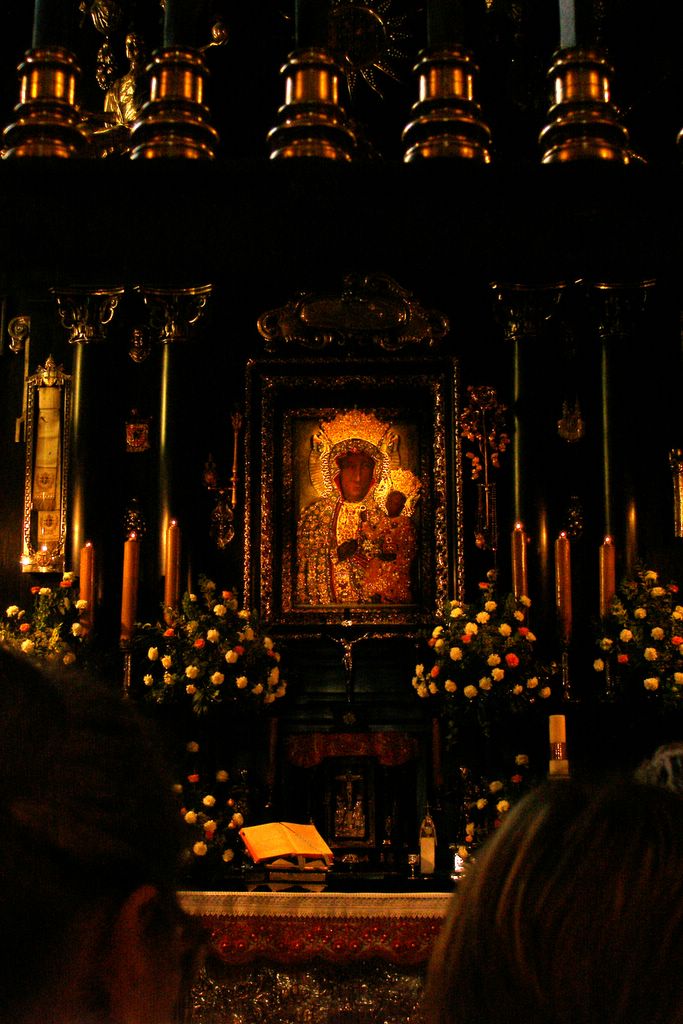
Here is what they are going to see. A Russian icon with a mysterious past, the Madonna of Częstochowa, brought here by Duke Ladislaus of Opole in 1382. Since then it has become a symbol of Poland's struggles, and a pilgrimage destination of international importance.

Now while we are on the subject of Poland's struggles, please permit me to indulge in a genuinely uncharacteristic (for me on this blog, anyway) rant. I am generally not against most forms or expressions of faith and piety, like what we see in Częstochowa. In fact, I believe that for a lot of people it can be a good influence, and keep them out of trouble, criminal activity, violence, intolerance, bigotry and meaness of spirit.

But when fundamentalism turns to brainwashing, I get angry. For example, I did not intend to register to vote in the upcoming parliamentary and presidential elections in Poland. I am not resident there, don't pay taxes, and quite frankly, am not sure I truly understand what all the most important political issues are. But as of today, this has changed. I registered to vote, and vote I will, if only because that Mercedes-chauffered Taliban demagogue, Father Rydzyk of Radio Maryja, in Jasna Góra on Saturday, began his campaign to "bury" the Platforma Obywatelska and Donald Tusk. According to Rydzyk, voting for them is a sin and anti-Roman Catholic. Seems they're a pack of liberals, communists and Free Masons, although he has yet to accuse them of being Jews. That's what you get for focussing on the economy, unemployment and health care, instead of howling for punishment of anyone who does not agree with you, hounding the business class, and "defending" the family, the peasantry, and the state religion.

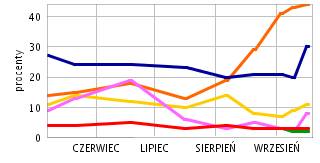
Well Ayatollah Rydzyk, guess what? Here's who the opinion polls show are the top runners for President. See the orange line? That's Tusk (Evolution not Revolution). See the yellow and red lines? Those are Rydzyk's men, Lepper (Samoobrona) and Giertych (Liga Polskich Rodzin). Who will bury whom? Watch this space for results of the elections to Parliament (Sept. 25) and for the President (Oct. 9).

Saturday, September 17, 2005

Warsaw, July 11-13, 2005


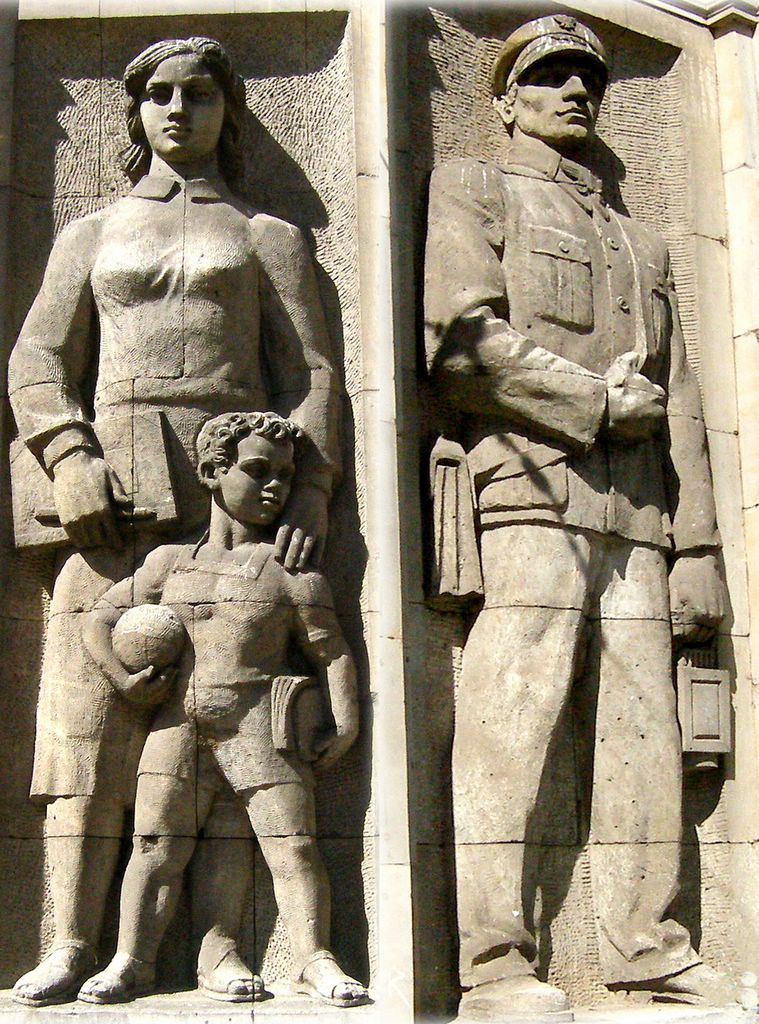
Warsaw, July 12, 2005 - Ideal heroes of socialism stand guard at the MDM, the Marszałkowska Housing District. They are my contemporaries, sculpted the year I was born.

Wednesday, September 14, 2005

Maćkowa Ruda, July 4-11, 2005


"Not history or myth – but landscape and atmosphere somehow." (Lawrence Durrell)

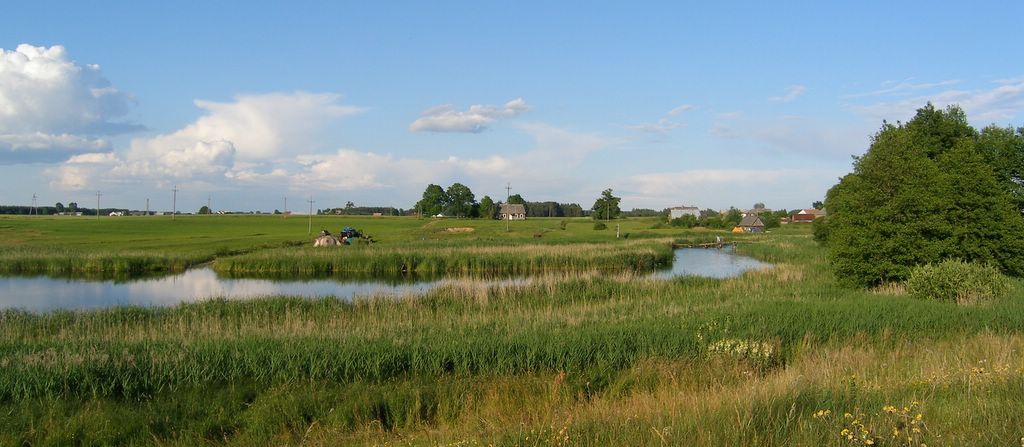
The more I travel through this world, the more I appreciate the qualities of tolerance and peace. Particularly am I drawn to humanized landscapes, natural environments transformed by human settlement, agriculture and forestry. Here in Maćkowa Ruda, in the northeast corner of Poland, the people live and let live, and the Czarna Hańcza river flows clean and clear through a benign and hospitable land.


In the last house in the village, literally at the end of the road, live my friends Alfred and Ela, with a number of cats and a dog named Kozłoski.


It's the kind of place where early morning feels like the first day of creation.


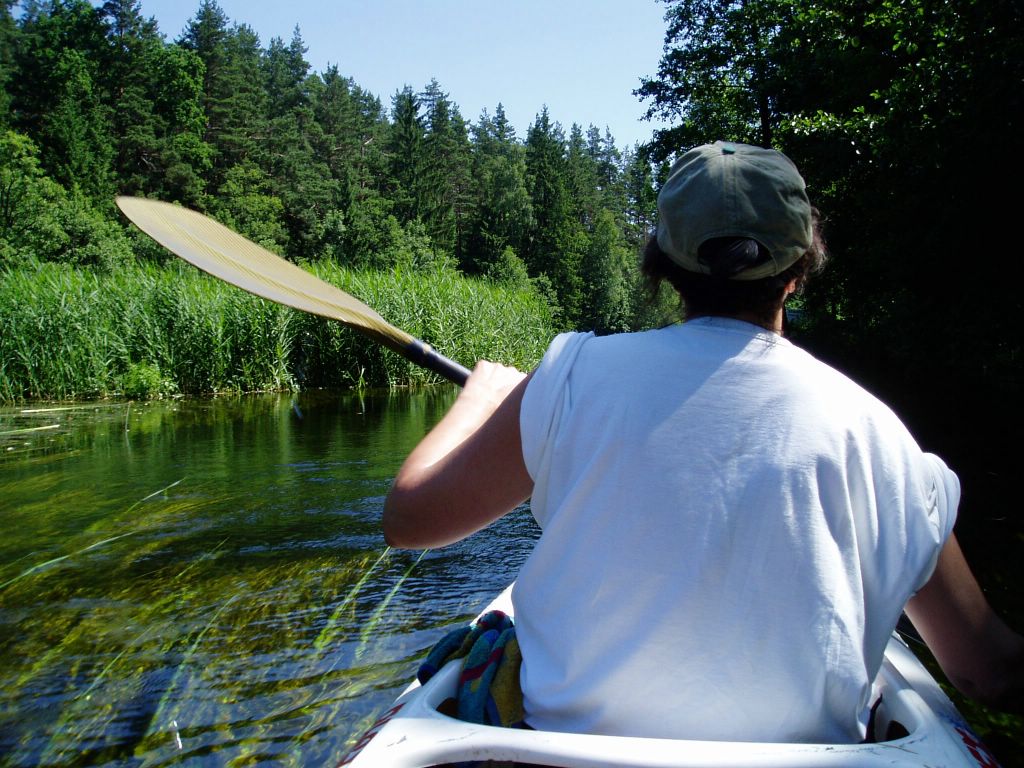
As the morning sun burns away the night fog, neighbour Piotr Malczewski takes his photography students kayaking on the river, Buda Ruska, July 5, 2005.


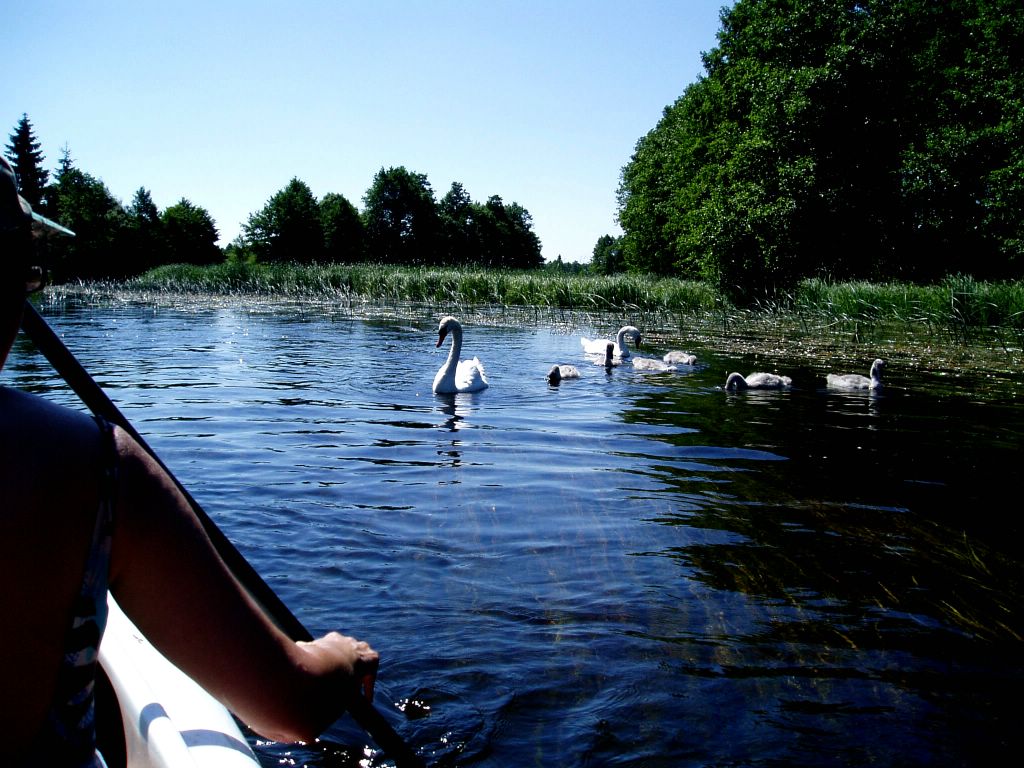
Louise and I borrowed a kayak from the Komorowskis, to paddle our way down to Frącki. July 9, 2005.


A pair of swans with their cygnets.


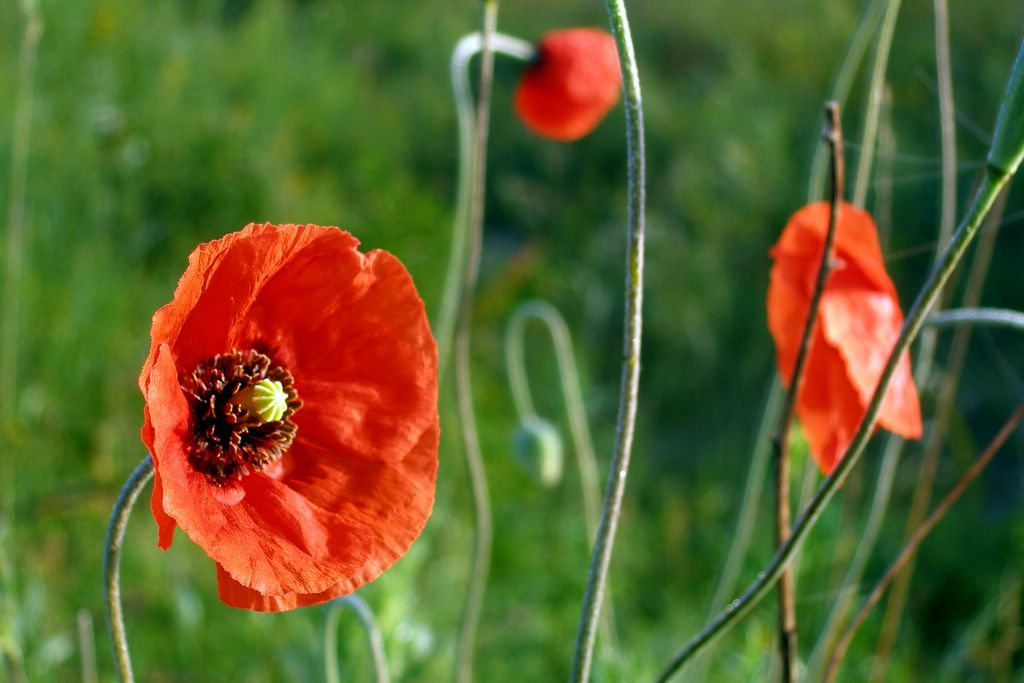
Can anyone help me out here? What is this flower?


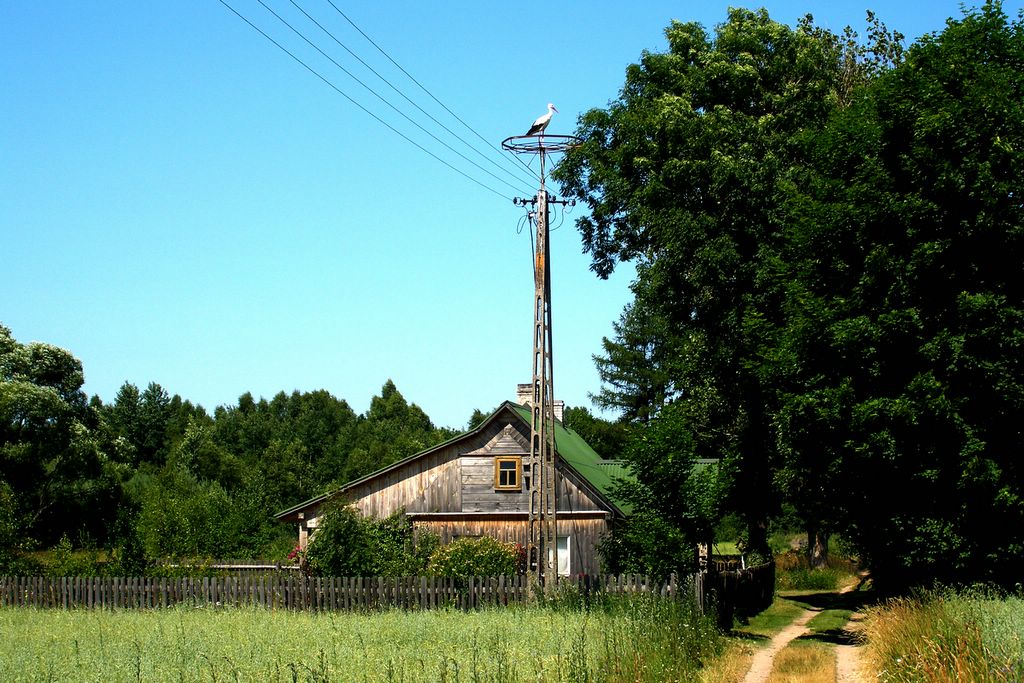
A stork keeps a solitary vigil over Ela's house. In summer, this part of Poland has one of the greatest concentrations of the magnificent bird.


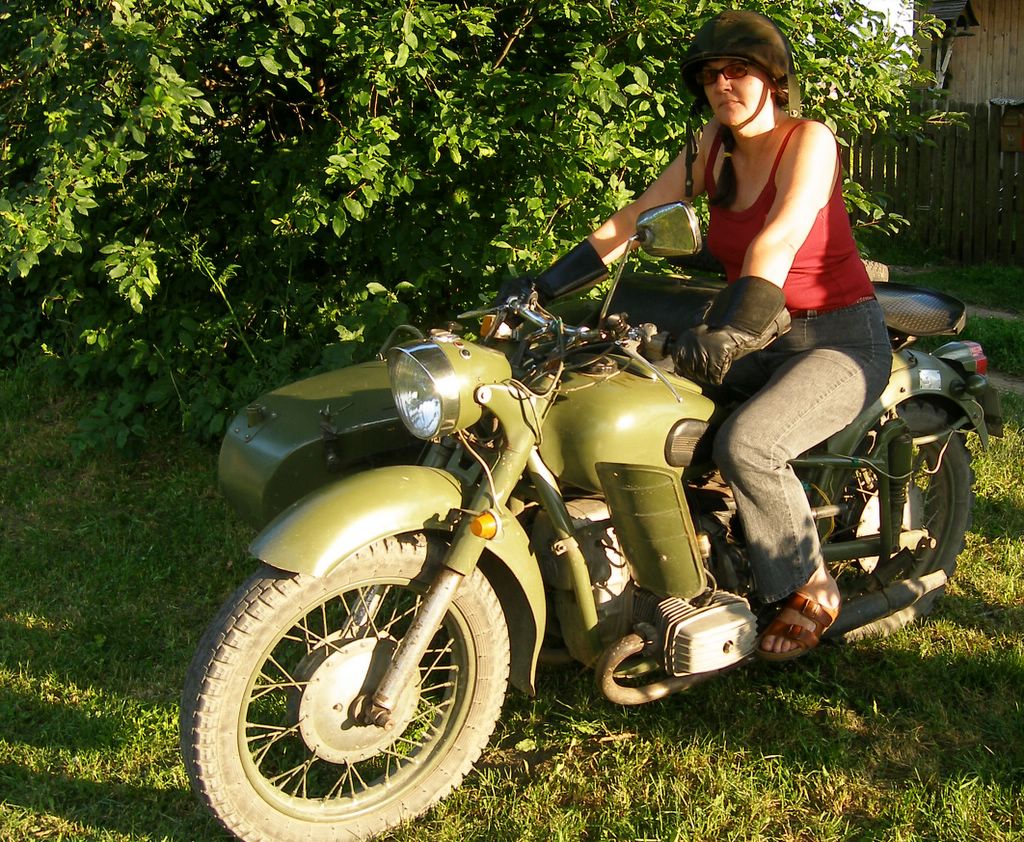
When she's not kayaking, birdwatching or searching for rare plants, Louise likes to bomb around on her Soviet Dnepr M-72 motorcycle with sidecar.


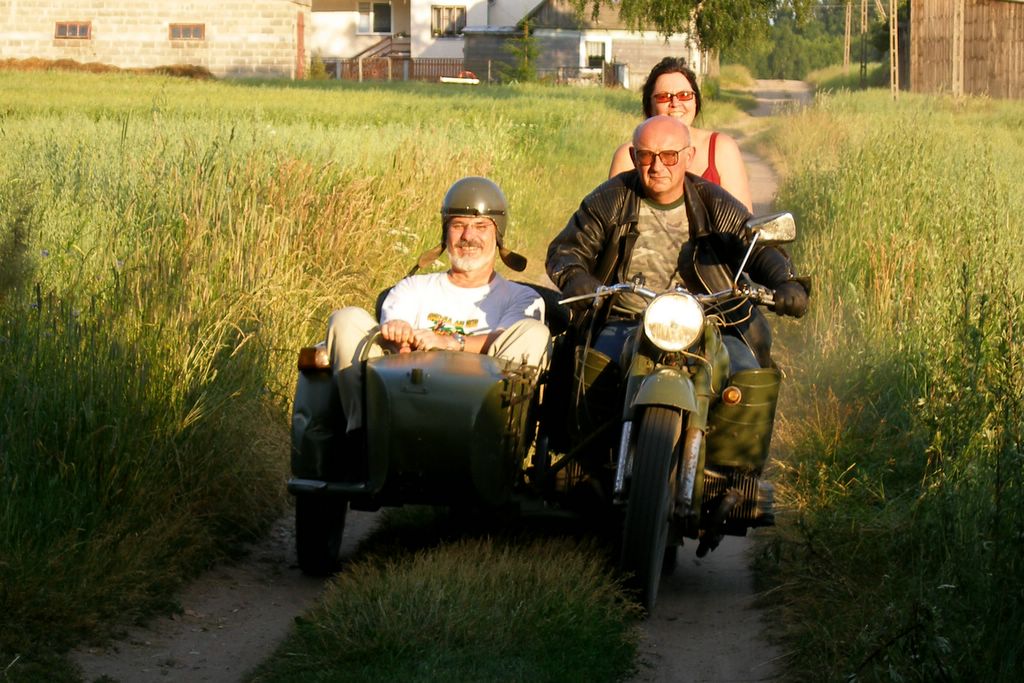
We look pretty happy considering how terrifying it is to bump around on field roads at a 100 km/h. Maćkowa Ruda, July 8, 2005.


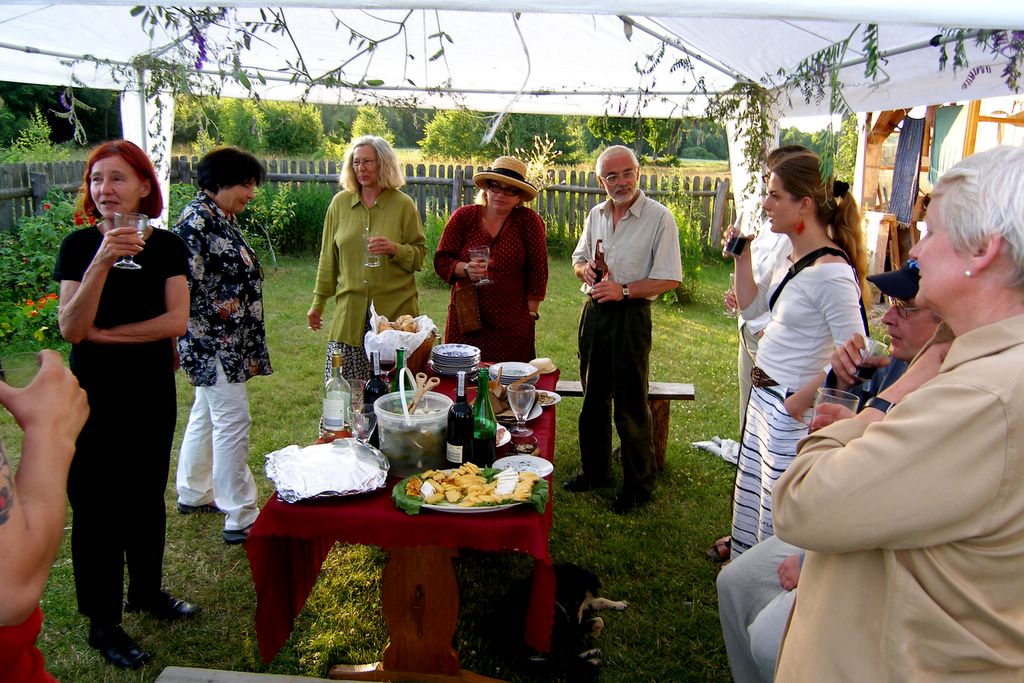
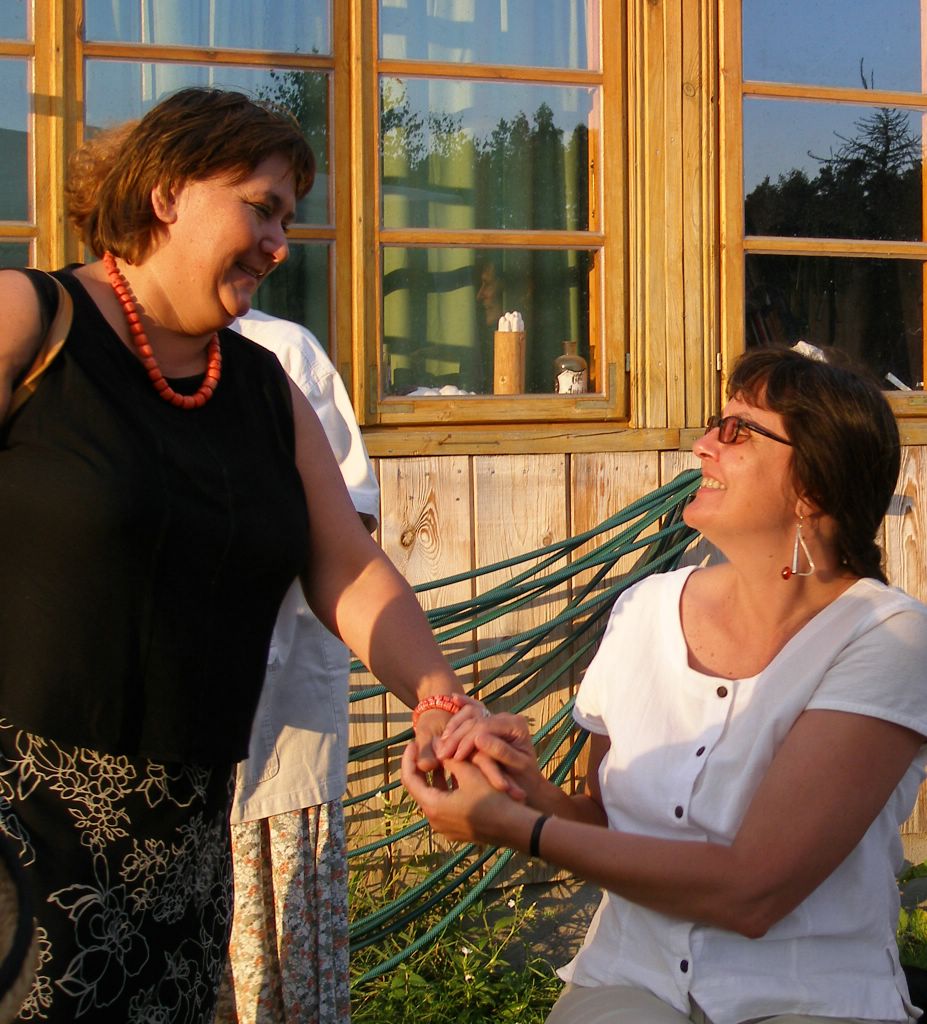
Ela's birthday and nameday - a festive occasion. Maćkowa Ruda, July 9. 2005.


Pani Komorowska z Panią Luizą.


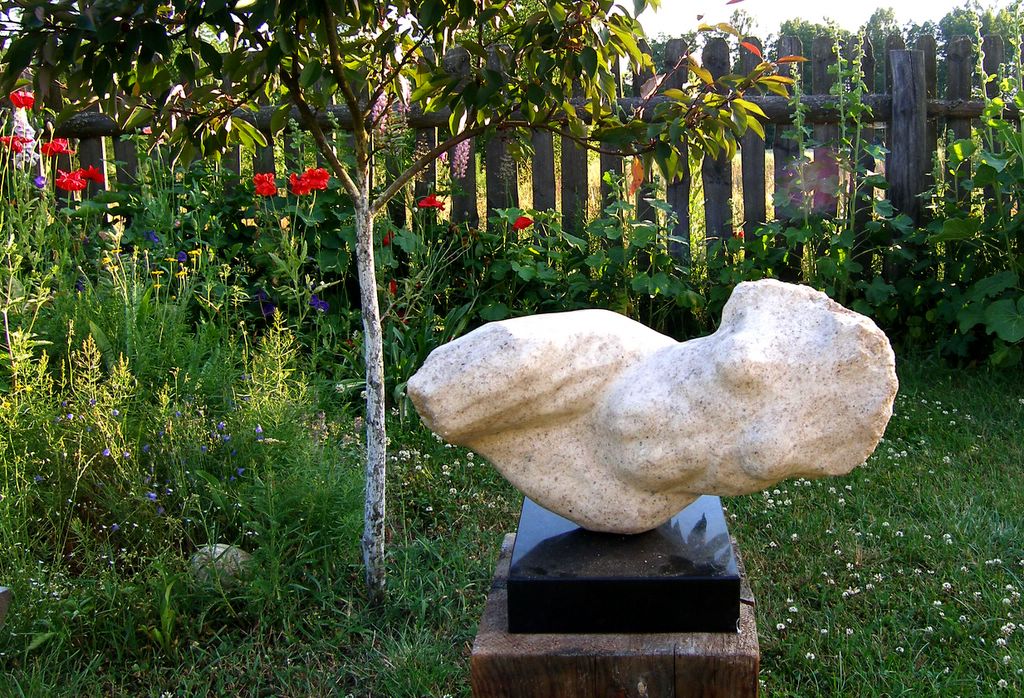
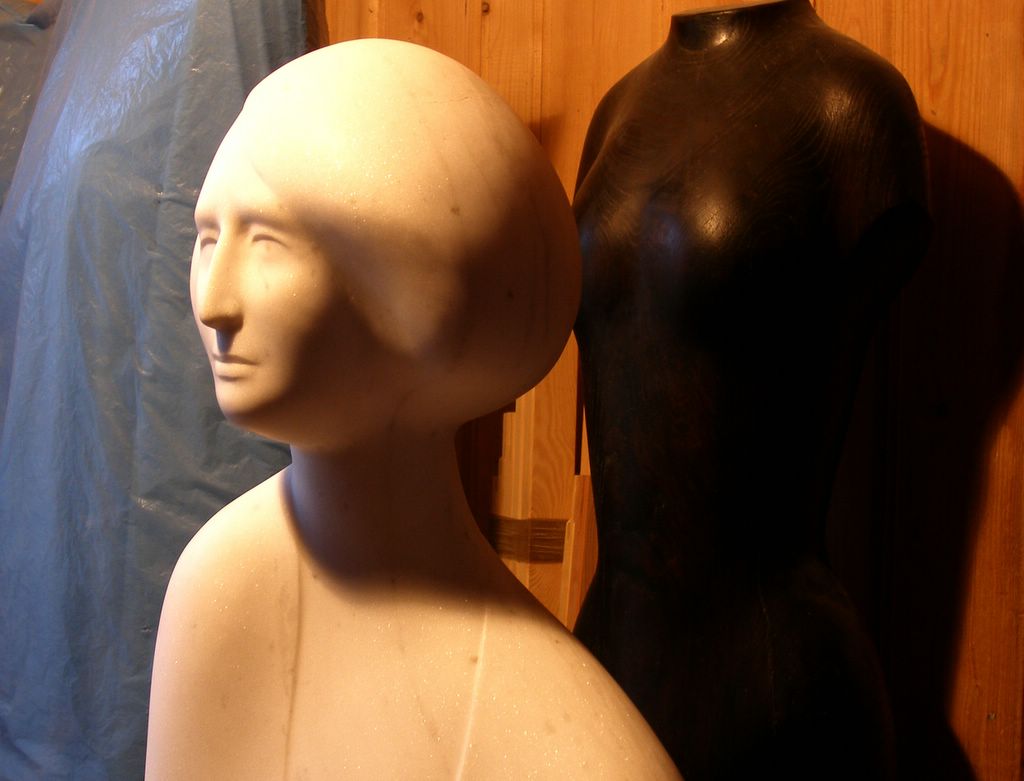
Venus in white marble, one of Ela's sculptures. It has such a classical feel to it I'd not be surprised to find it lying among the ruins of some ancient Greek amphitheatre.


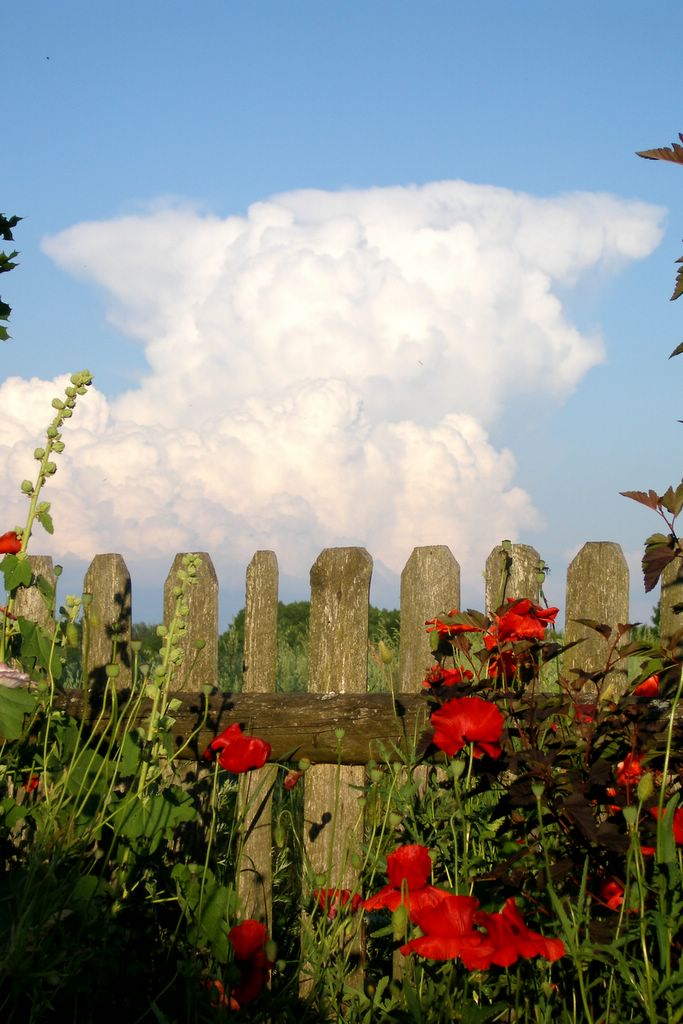
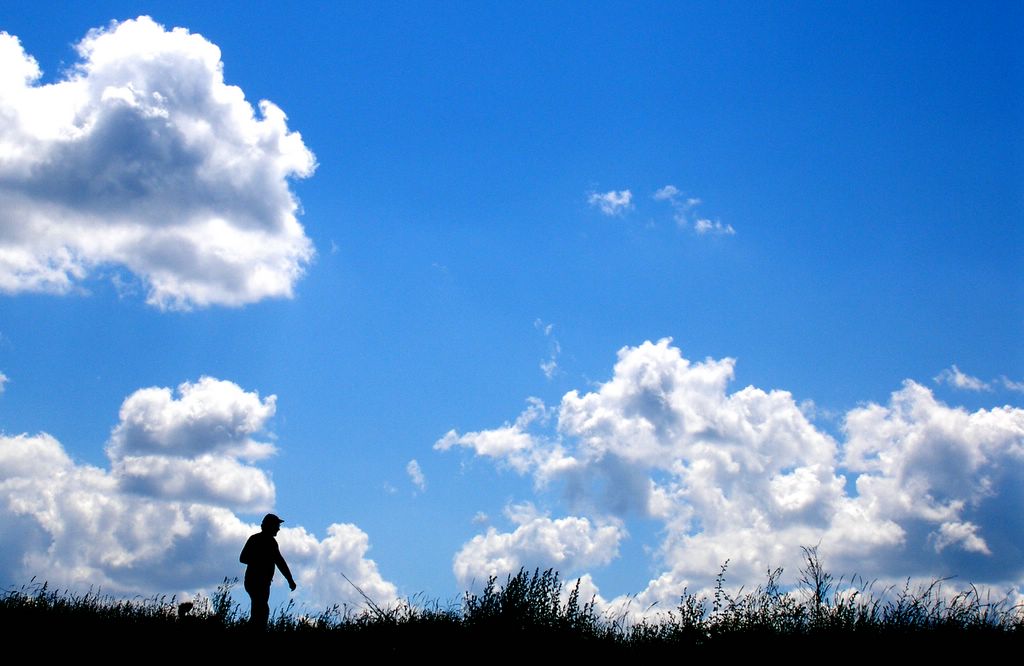
Another kind of sculpture, white thunderheads over Belarus.


Another of Ela's sculptures. Have you read Reflections on a Marine Venus?


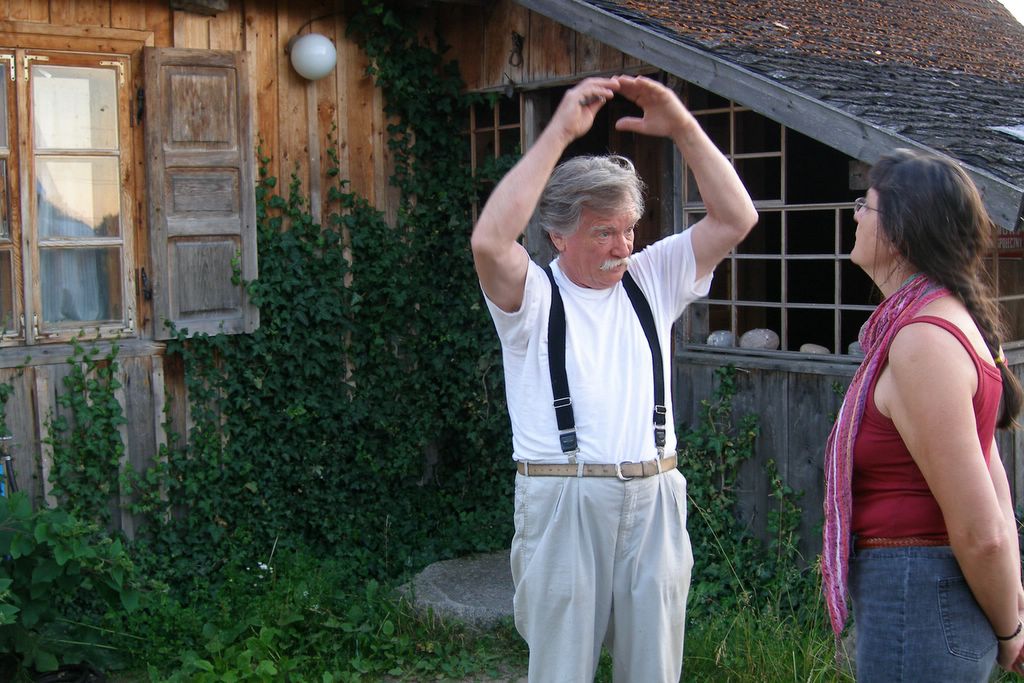
Alois Nawrat, sculptor and neighbour.


For me, Alek's work, whether in marble or in wood, evokes the 1920's and 30's.


Alek with a design model for a sculpture of John-Paul II.


Fredek walking with Kozłowski, July 10, 2005.

Saturday, September 10, 2005

Vilnius, July 5-7, 2005


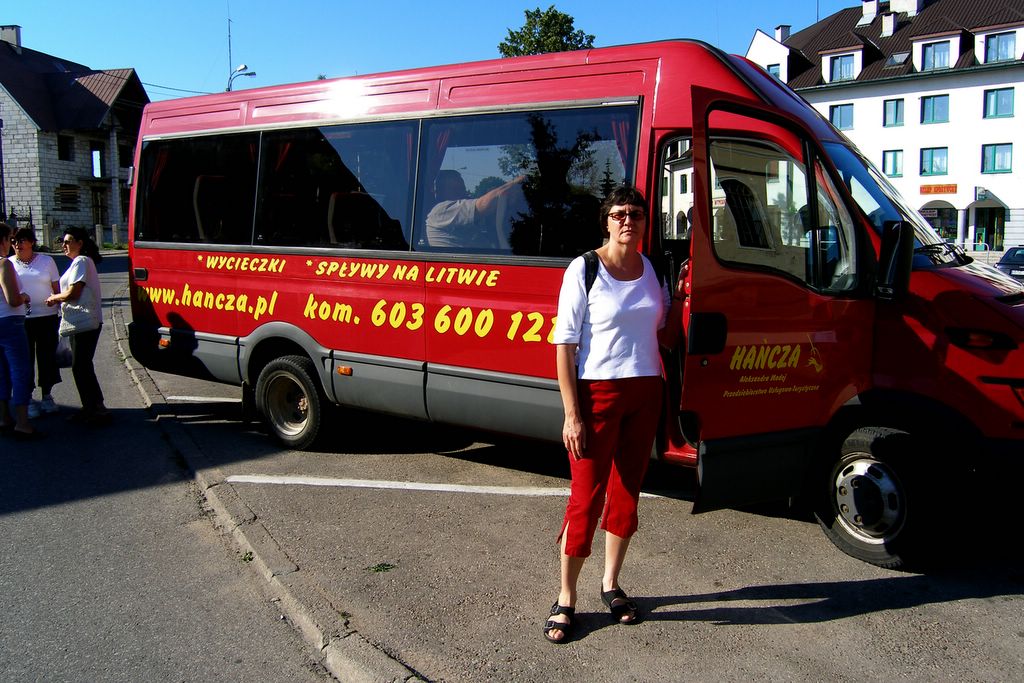
Following our weekend in Warsaw, we made our way by train to Fredek and Ela's country place in Maćkowa Ruda, near Suwałki. From there, at 7 a.m. the following morning, we joined a local tour group for a ride to Vilnius, about four hours to the east in Lithuania. Sejny, July 5, 2005.


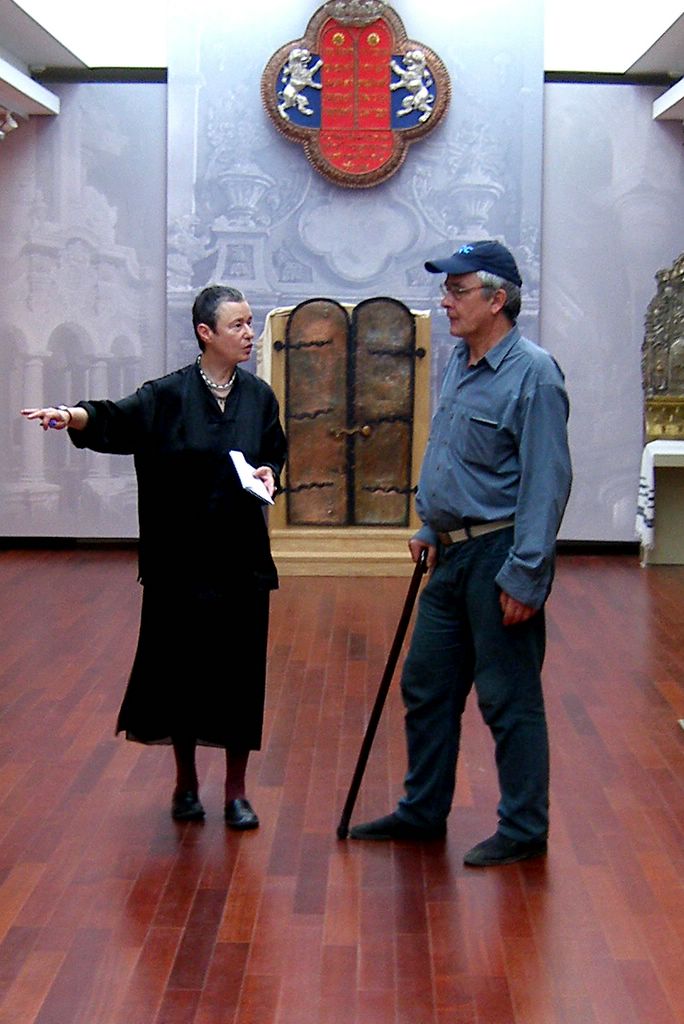
Our host in Vilnius was Ola, a friend of Fredek and Ela's. The day of our arrival she was working at the Vilna Gaon Jewish State Museum's Tolerance Centre.


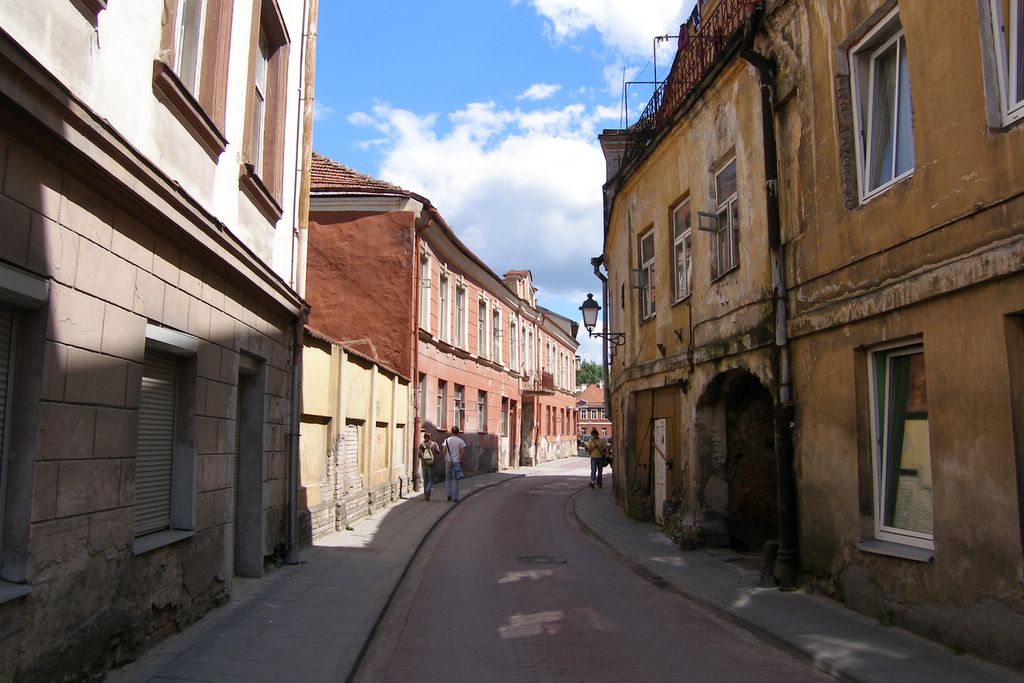
"Narrow cobblestone streets and an orgy of Baroque: almost like a Jesuit city somwhere in the middle of Latin America," wrote Nobel laureate Czeslaw Milosz.


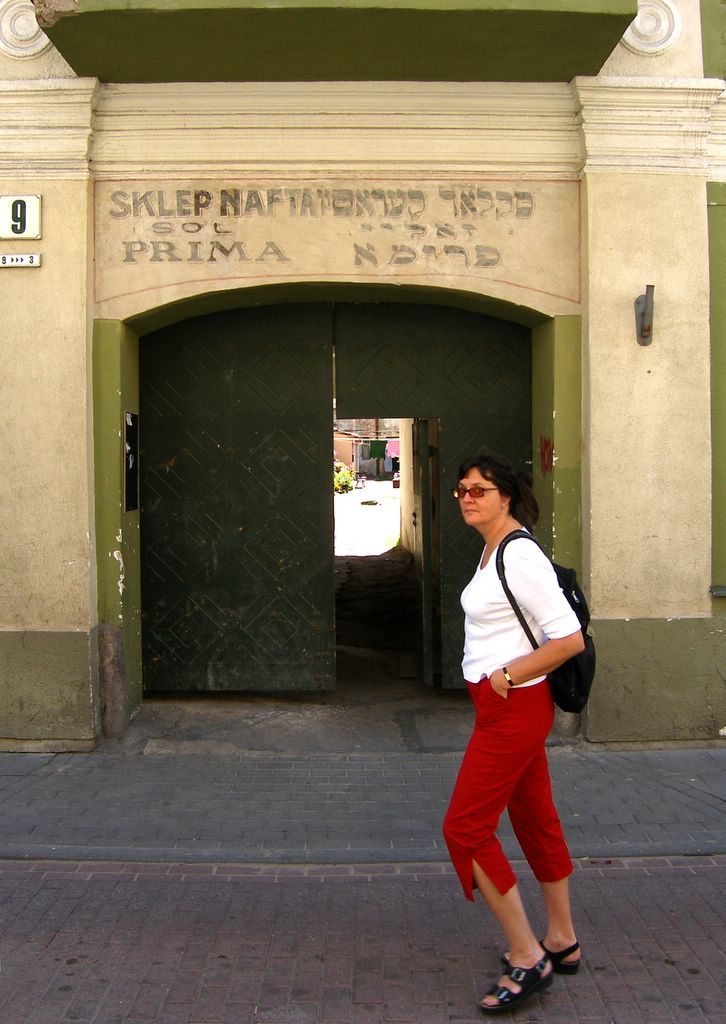
No. 9, Žemaitijos street, in the old Jewish quarter, once housed the Prima nafta and salt store. The sign here is in Polish and Hebrew. Vilnius, July 5, 2005.


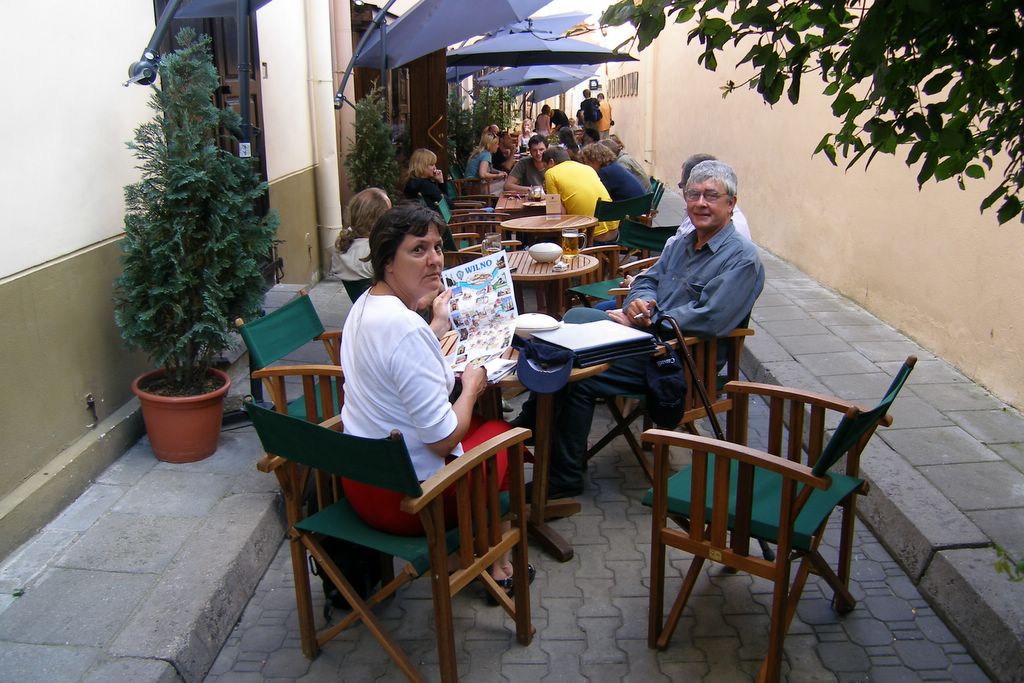
Antokolskio street in the old Jewish Ghetto is so narrow that this restaurant table barely fit in it.


Vilnius is a city of churches. This is probably the most famous, the Church of St. Anne, a flamboyant baroque masterpiece by Benedikt Rejt, ca. 1500. Legend has it that Napoleon was so delighted at the sight of it that he wanted to take it back to Paris with him.

To the right is the Bernardine Church, which was full of jolly monks haming it up for the turystki.


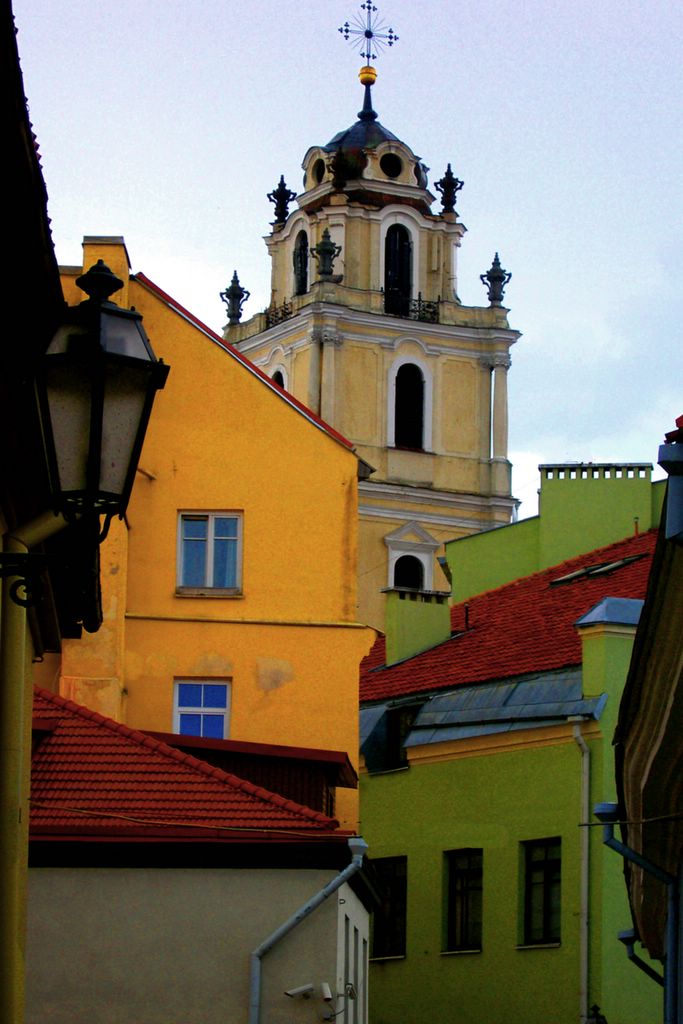
Belfry of the Church of St. John, part of the university. Like most of the churches in Vilnius, it was closed and severely damaged during the Soviet occupation.


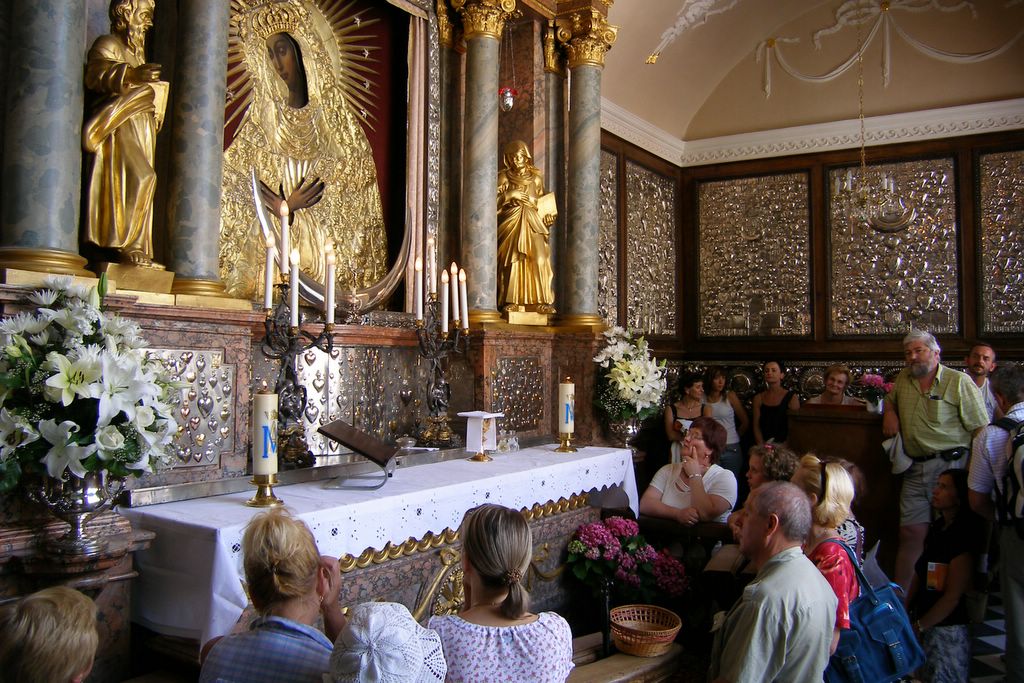
Ostra Brama in Polish, Aštros Vartai in Lithuanian, the Gate of Dawn is the site of one of the most revered shrines in all of Eastern Europe. The Madonna here has been worshipped by Poles and Lithuanians alike since 1671.


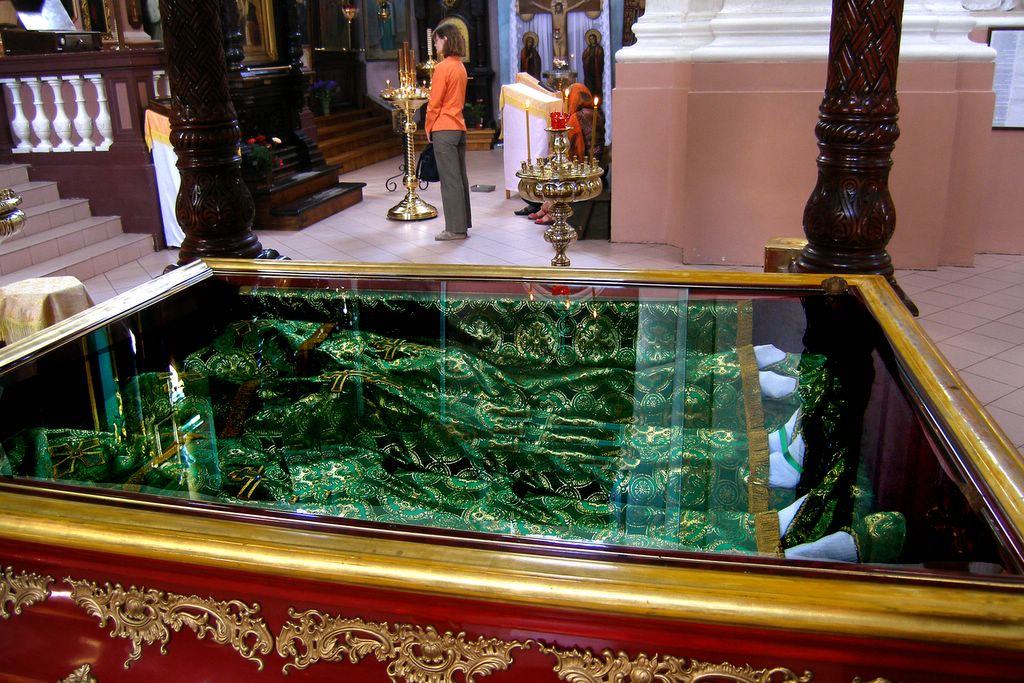
Just next door is the Russian Orthodox Church of the Holy Spirit. Its centrepiece is a glass case containing the remains of three Orthodox saints, the holy martyrs Anthony, Ivan and Eustatius.

They were noblemen who served Duke Algirdas. Anthony and Ivan converted to Christianity, thereby angering the pagan priests. The Duke had them hanged on an oak tree, but this backfired and inspired the people. Then Eustatius converted to Christianity, for which he was brutally tortured. His legs were smashed with hammers, and as he was dying he thanked God for his suffering. This prompted the Duke to speed things up, and he had the last brother hanged too. The result was mass conversions, including eventually that of the Duke himself, who ended his days as a monk. When their bodies were later found to be uncorrupted, the three martyrs were declared saints, around 1378.


Russian Orthodox Church of St. Michael, orig. 1514, reconstructed in the Russian Byzantine style in 1865 by order of Governor General Mikhail "the Hangman" Muravyov.


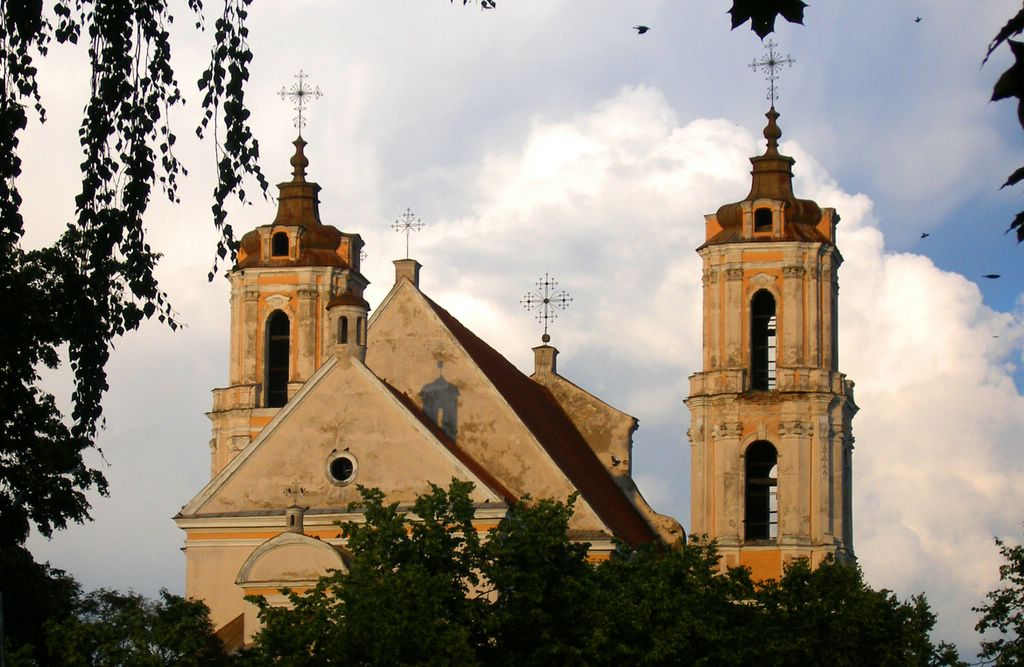
Church of St. Jacob and St. Philip, late 17th C. The Soviets had plans to demolish it, but perhaps through neglect, incompetence or laziness, they never got around to it.


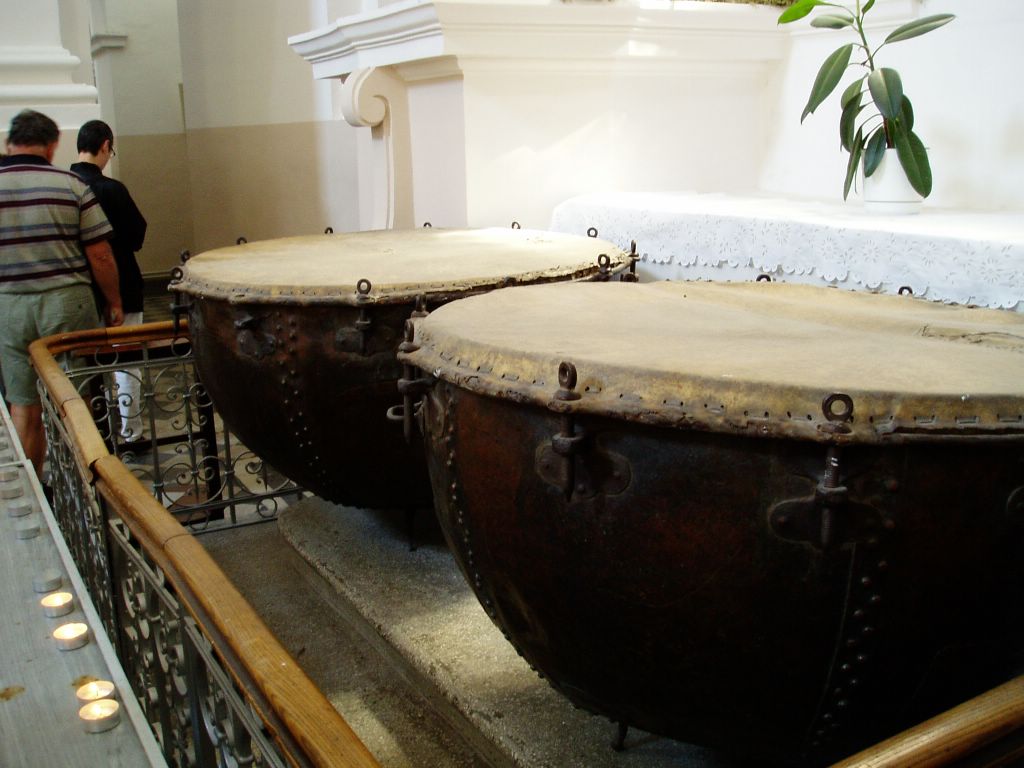
"The trumpets, kettledrums and war horns in all the Cossack camps and tchernya encampments filled the air with their raucous blaring from the day's first light, while the great holy drum of the Tartars, known as the 'Bhalt,' boomed like thunder well into the sunset." Henryk Sienkiewicz, With Fire and Sword.

Tartar drums in the Church of SS Peter and Paul.


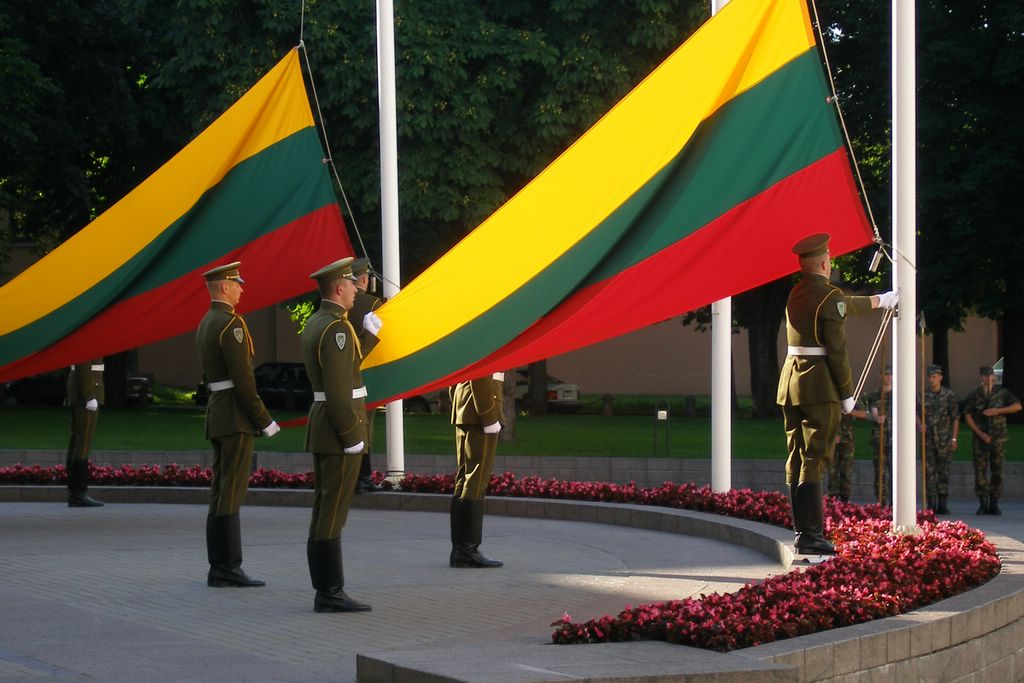
July 5th, dress rehearsal at the Presidential Palace for Lithuanian Statehood Day.


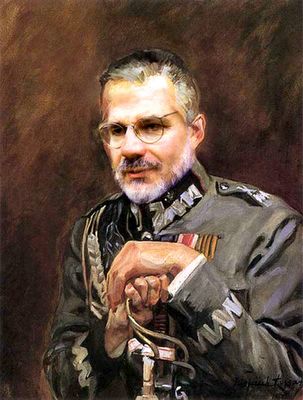
Ola's place on Savickio street is practically next door to the old tsarist Lukiškių Prison. Apparently Józef Piłsudski was once an inmate there. Coincidentally, Ola's house was once the residence of Józef's brother Adam Piłsudski. Stranger still, years later is was the home of Professor Leon Brodowski, father of Maciej, a friend of mine many years ago in Ottawa.


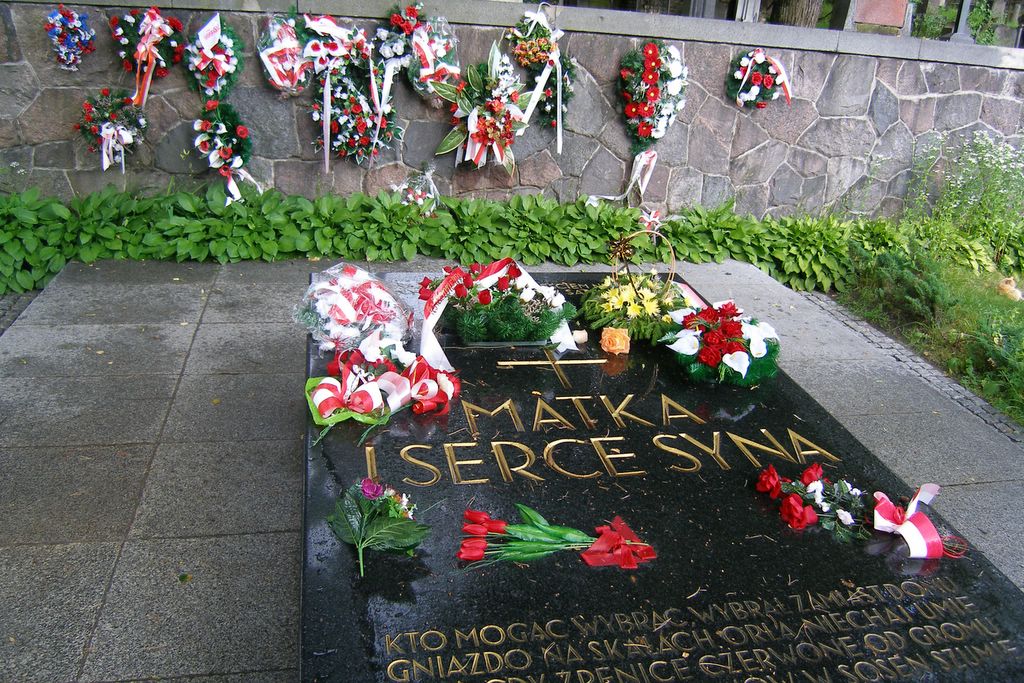
Józef Piłsudski is buried in a crypt in Wawel Castle in Kraków, but his heart lies here in his mother's grave in Rasų Cemetery. Vilnius, July 6, 2005.


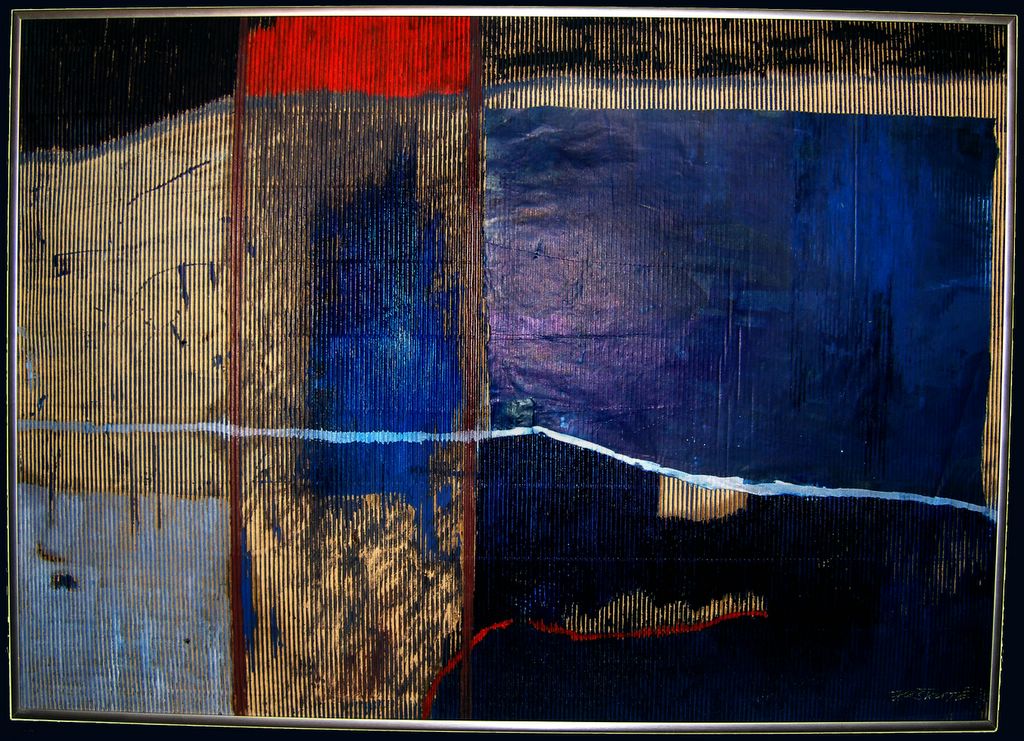
Painting by one of Ola's artist friends.